Thinking of DIY Car Body Repairs?
Read This Before You Pick Up the Sandpaper
Thinking of DIY Car Body Repairs
You’ve watched the videos.
You’ve seen the £29.99 scratch repair kits.
You’ve probably thought:
“How hard can car body repairs really be?”
On the surface, DIY car body repairs look simple. A bit of sanding. Some filler. A spray can. A polish.
Job done.
Except it rarely works like that.
Before you attempt DIY car body repairs, you need to understand what usually happens next and what it actually costs when it goes wrong.
The Illusion of “Simple” Car Body Repairs
Modern vehicles use:
-
Multi-layer paint systems
-
Metallic and pearl finishes
-
UV-protected lacquer
-
Flexible bumper coatings
-
Tight panel tolerances
Professional car body repairs involve:
-
Correct abrasion sequencing
-
Controlled paint depth
-
Accurate colour scanning
-
Blending into adjacent panels
-
Controlled curing temperatures
-
Machine finishing to factory gloss
DIY kits rarely account for even half of that.
That’s why so many at-home attempts result in:
-
Obvious colour mismatch
-
Dull or hazy lacquer
-
Visible repair lines
-
Texture differences under sunlight
-
Peeling within months
The Real Cost of Getting DIY Car Body Repairs Wrong
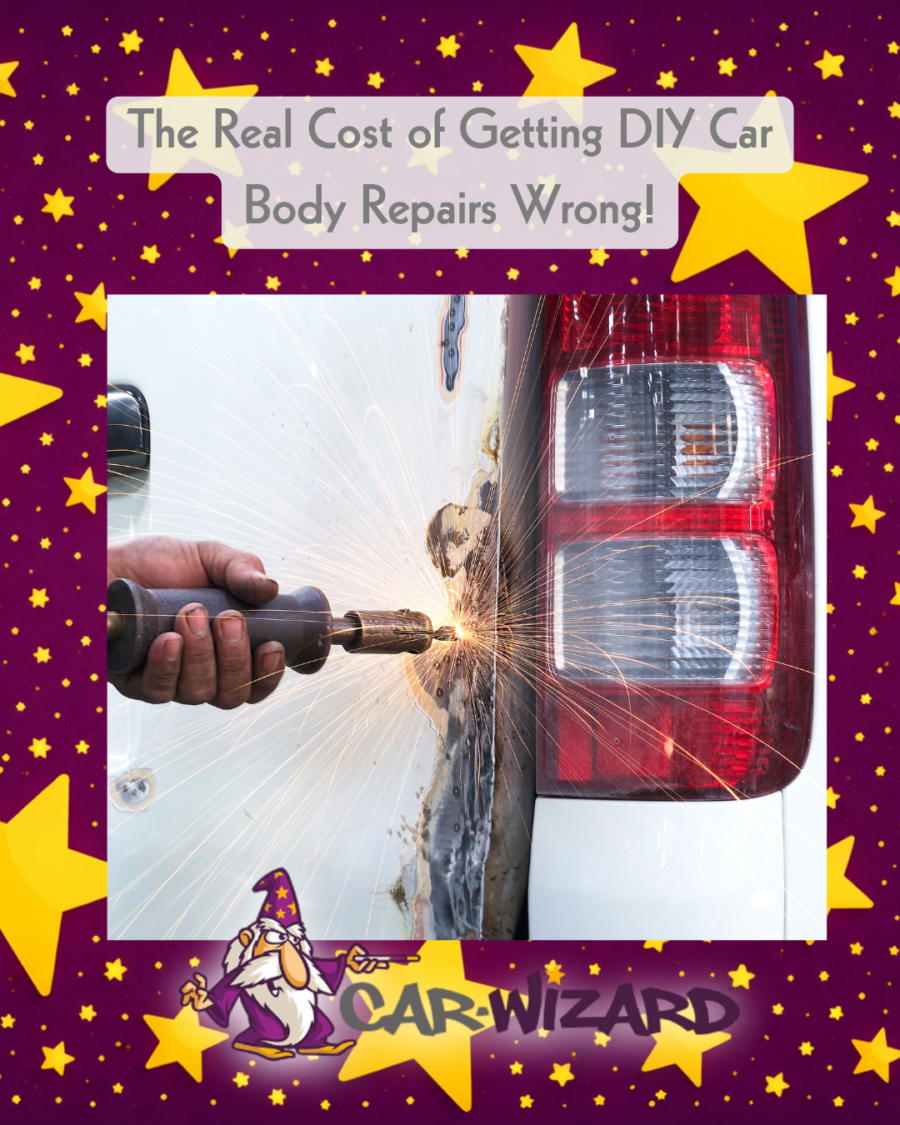
Here’s what typically happens across the UK:
| Damage Type | Original Professional Repair | Cost After Failed DIY |
| Small bumper scuff | £180–£300 | £350–£600 |
| Local scratch repair | £150–£250 | £300–£500 |
| Minor dent repair | £200–£350 | £400–£700 |
| Alloy wheel scuff | £90–£150 | £180–£300 |
Why does the cost increase?
Because we must now:
-
Strip the incorrect paint
-
Remove uneven filler
-
Correct over-sanding
-
Rebuild primer
-
Reapply basecoat
-
Blend correctly
- Re-lacquer and polish
A small repair becomes a larger one.
The Colour Match Problem (The Biggest DIY Failure)
Paint codes do not guarantee a match.
Cars fade.
Metallic flake shifts under light.
Panels age differently.
Professional car body repairs use digital spectrometers to scan your vehicle and adjust the formula accordingly.
DIY touch-up pens use generic paint.
Even a slight shade difference becomes obvious in daylight.
Once that happens, blending becomes essential and blending is where most DIY repairs fail.
The Lacquer Trap
Clear coat (lacquer) is where many DIY attempts fall apart.
Correct lacquer application requires:
-
Even atomisation
-
Correct flash time
-
Controlled humidity
-
Proper curing temperature
Apply too much and it runs.
Apply too little and it looks flat.
Sand incorrectly and you break through.
Correcting failed lacquer often means repainting the entire panel.
That alone can add £250–£400 to the repair.
The Sanding Mistake That Makes It Worse
DIY videos often show aggressive sanding.
What they don’t show is how easy it is to:
-
Burn through the clear coat
-
Flatten metallic flake
-
Remove UV protection
-
Distort panel edges
Once factory paint is removed incorrectly, it cannot be restored without repainting.
Professional car body repairs aim to preserve as much original paint as possible.
DIY work usually removes too much.
The Lease Return Risk
If your vehicle is leased or financed, DIY car body repairs carry serious risk.
Lease inspectors check:
-
Paint consistency
-
Colour accuracy
-
Texture uniformity
-
Visible repair lines
Typical lease penalties in the UK:
-
£250–£500 per panel
-
Full repaint charges
-
Additional admin fees
A failed DIY repair can easily result in £400–£800 at handback.
A professional repair beforehand is almost always significantly cheaper.
The Psychology Behind DIY
DIY feels cheaper because you avoid paying today.
This is called loss aversion.
People avoid spending £250 now and risk spending £600 later.
There is also an overconfidence bias.
Watching a short tutorial creates the illusion of skill.
What it does not show is:
-
Years of spray control training
-
Blending technique mastery
-
Experience correcting mistakes
Professional car body repairs are skill-based, not product-based.
Buying the kit does not buy the expertise.
Why Professional Mobile Repairs Make More Sense
Modern mobile car body repairs eliminate the inconvenience of traditional bodyshops.
At Car Wizard, we provide professional car body repairs across:
- Bristol Car Body Repairs
- Gloucestershire Car Body Repairs
- Somerset Car Body Repairs
- Wiltshire Car Body Repairs
We use:
-
Digital colour scanning
-
Controlled curing systems
-
Professional blending methods
-
Machine finishing to factory standard
Most cosmetic repairs take 2–4 hours.
They come with a lifetime guarantee.
They do not need correcting later.
Frequently Asked Questions About DIY Car Body Repairs
Is DIY car body repairs cheaper?
Only if it works perfectly. Failed attempts often double the original cost because the incorrect repair must be removed before fixing the damage properly.
Why does touch-up paint not match?
Paint fades and production batches vary. Professional repairers scan the vehicle to adjust the colour accurately.
Can DIY repairs affect lease returns?
Yes. Lease inspectors often flag visible repairs, which can result in £250–£500 charges per panel.
What happens if the lacquer peels?
The panel must be stripped and repainted. Costs typically start from £250.
Is mobile repair as good as a bodyshop?
Yes. Modern SMART repair systems meet factory standards when carried out by experienced technicians.
The Smart Question to Ask
Before attempting DIY car body repairs, ask:
“If this goes wrong, will it cost more to fix?”
In most cases, the answer is yes.
Car paint systems are technical.
Blending is skilled.
Finishing is precise.
This is not guesswork.
Skip the Experiment. Get It Done Properly.
Before buying a repair kit, send us photos.
Get a clear quote.
Understand your real cost.
You might find that professional car body repairs cost less than expected and save you hundreds in correction work later.
📸 Request your Quick Quote today and avoid turning a £250 repair into a £700 correction.